Trump Condemns Beirut Attack in Stunning Iran Deal Update


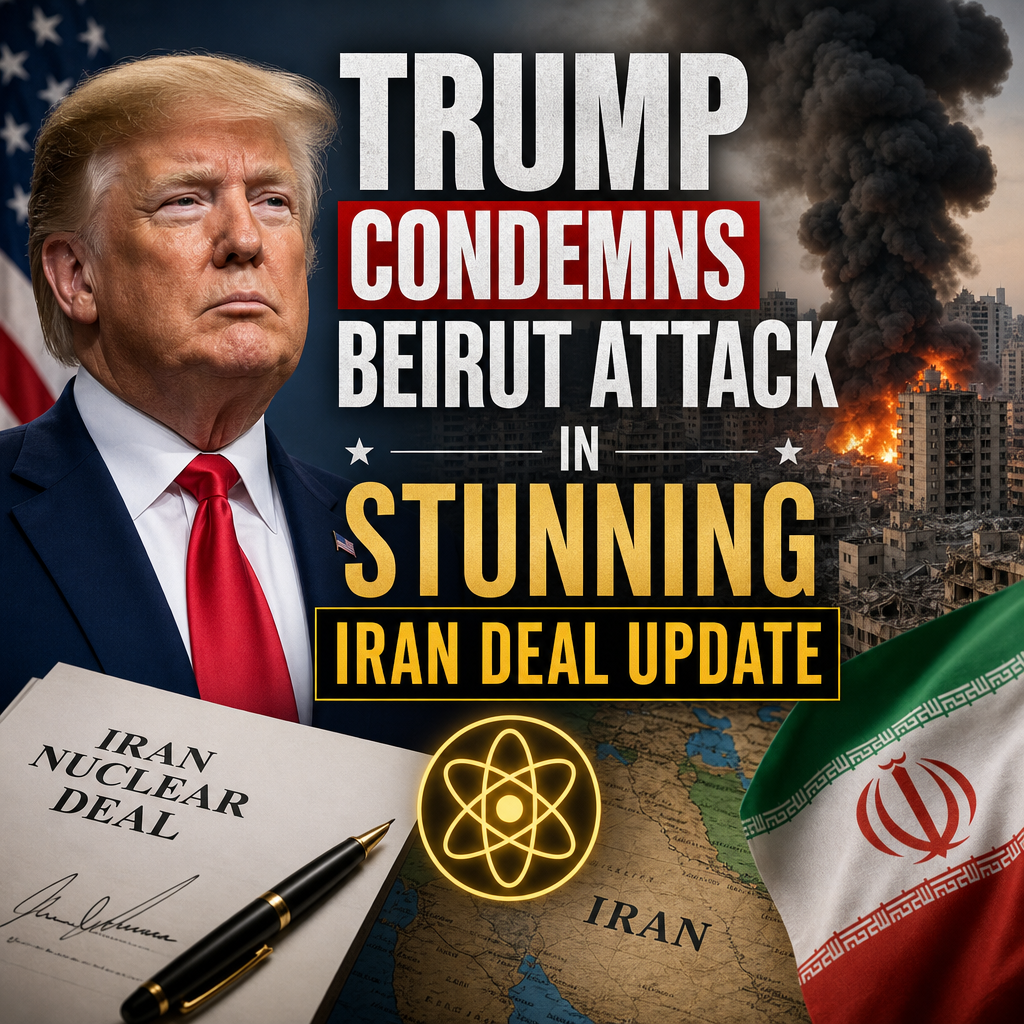
Trump Iran deal talks took an unexpected turn after Donald Trump condemned a strike in Beirut while still claiming a nuclear agreement with Iran may be within reach, a combination that captures how fast Middle East diplomacy can shift when fighting intensifies. The remarks landed in the middle of renewed concern over regional escalation, with media coverage framing the moment as both a warning about the wider conflict and a signal that negotiations have not fully collapsed.
Trump Iran deal and the Beirut strike: pressure, diplomacy, and mixed signals
The core tension in this story is straightforward: military action is making diplomacy harder, yet the diplomatic channel has not disappeared. According to reporting from Al Jazeera, Trump criticized an Israeli attack on Beirut and said an agreement with Iran remained “close.” That pairing matters. Condemning violence while describing a near-term deal suggests a political calculation aimed at projecting control, leverage, and perhaps urgency.



At face value, the message is unusual because it joins two positions that are often separated in public debate. On one hand, condemning a strike in a major Arab capital reflects concern about civilian harm and regional spillover. On the other, insisting that a deal with Iran is still close implies that direct negotiations or backchannel talks are not dead, even if they are fragile.
Coverage across international outlets points to a broader pattern: the Middle East crisis is now being shaped by overlapping wars, diplomatic maneuvering, and domestic political pressures in Washington and elsewhere. Al Jazeera’s framing emphasizes the political stakes of Israel’s actions and the difficulty of separating the Gaza war, Lebanon, and Iran’s wider influence in the region. That view is consistent with a common theme in regional reporting: every strike risks widening the conflict beyond the intended target.




Why the Beirut condemnation matters
A statement condemning an attack in Beirut is more than a passing remark. Beirut is not just another battlefield headline; it is a city tied to memories of civil war, economic collapse, and the repeated danger of regional confrontation spilling into civilian spaces. A strike there, or near it, immediately raises questions about escalation, proportionality, and the risk of dragging Lebanon deeper into a conflict it can barely absorb.
This is also where political messaging becomes important. If Trump is positioning himself as a potential dealmaker, condemning the attack allows him to appeal to audiences worried about endless war. It also leaves room for a tougher negotiation stance toward Iran by signaling that instability only strengthens the argument for an agreement that lowers the temperature.
At the same time, critics would likely argue that verbal condemnation alone does little unless it is matched by pressure for restraint. That criticism appears indirectly in much of the foreign-policy commentary surrounding the conflict: leaders can denounce violence, but the real test is whether they can influence allies and adversaries to step back.
What the different outlets suggest about the wider picture
The three source streams offer distinct angles that, taken together, help explain why this moment feels so unstable.
Al Jazeera: diplomacy under the shadow of war
Al Jazeera’s report presents the situation as a live diplomatic test. The outlet tends to emphasize regional consequences and the human cost of strikes, and its coverage here fits that approach. The key takeaway is that talk of an Iran deal is not happening in a vacuum; it is unfolding while military pressure remains high and public anger across the region is intensifying.
Sky News: focus on political and strategic implications
Sky News coverage of Middle East developments typically centers on the strategic implications for Western governments and security partners. In this context, the likely emphasis is on what Trump’s comments mean for negotiations, alliances, and the prospect of de-escalation. That lens is useful because it highlights how a single statement can shape expectations among diplomats and markets as well as voters.
RT: skepticism toward Western and Israeli narratives
RT often takes a more skeptical view of Western policy and Israeli military action, generally pressing on questions of motive, hypocrisy, and escalation. In a story like this, that perspective helps underline the possibility that the condemnations and negotiations are both being used as tools of influence. Even if readers disagree with RT’s framing, it offers a reminder that every official statement is also political theater.
What can be said with confidence—and what cannot
There are a few things that seem clear enough.
– The Beirut strike has renewed concern about regional escalation.
– Trump’s condemnation suggests awareness that the optics of the conflict matter far beyond the immediate target.
– His claim that an Iran deal is still close indicates that diplomatic channels may still be active.
– The broader story is not just about one attack, but about whether pressure and negotiations can coexist.
What remains uncertain is just as important. It is not clear how close any agreement truly is, how much leverage Trump has over the parties involved, or whether condemnation of the attack will translate into meaningful policy changes. Political leaders often describe deals as “close” when they want to preserve momentum, manage markets, or reassure allies. Sometimes that confidence is real; sometimes it is tactical.
A cautious conclusion
The most reasonable reading is that Trump’s comments reflect a volatile mix of politics and diplomacy. Condemning a Beirut attack gives him space to present himself as a critic of escalation, while insisting that an Iran deal remains near lets him project optimism and dealmaking credibility. But the reality on the ground is harsher: every new strike makes an agreement harder to sell, especially if civilians in the region see diplomacy as arriving too late.
So the update is striking not because it confirms a breakthrough, but because it shows how negotiations can continue even while the region edges closer to another crisis. That is the uncomfortable truth at the center of this story: peace talks may still be alive, but they are moving in the shadow of war.